

Transformer Energization
Transformer energization studies investigate the severe non-linear magnetizing inrush currents, prolonged DC offsets, and temporary voltage dips that occur when large power transformers are energized. MEPCO models core saturation and hysteresis in PSCAD/EMTDC to prevent false differential protection tripping, harmonic overvoltages, and sympathetic inrush in neighboring transformers.

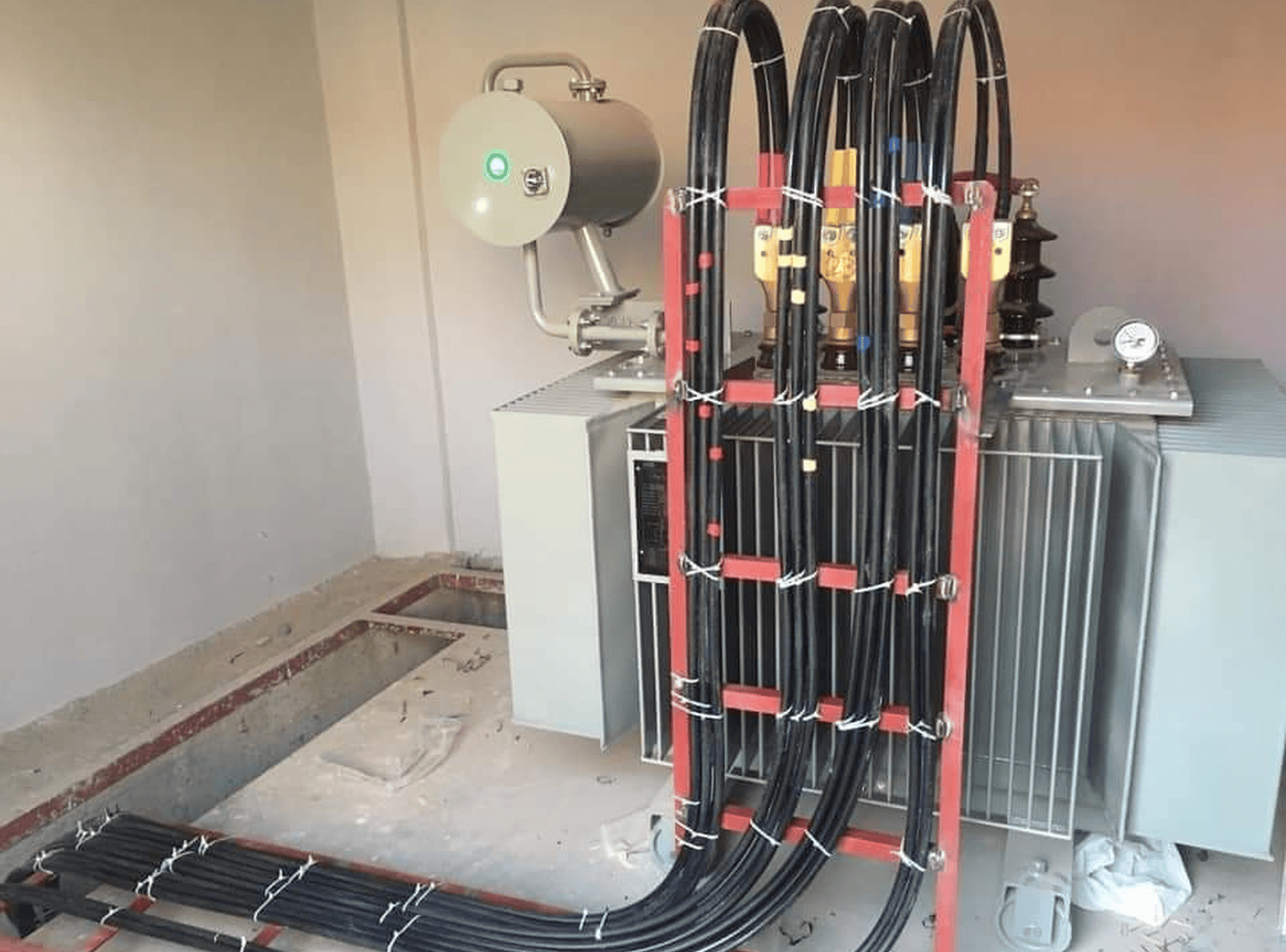
Figure 1: High-voltage power transformer subject to inrush current modeling and point-on-wave switching analysis.
Technical Scope & Engineering Capabilities
MEPCO Engineering Projects brings specialized domain knowledge, rigorous modeling standards, and practical site experience to every assignment. Our scope covers:
- Magnetizing Inrush Current Simulation: Calculating peak inrush currents (\(I_{inrush}\)), inrush envelope decay time constants, and DC offset under worst-case closing phase angles and maximum residual core flux (\(B_r\)).
- Harmonic Content Analysis: Quantifying 2nd, 3rd, 4th, and 5th harmonic current components to verify harmonic restraint settings on transformer differential (87T) protective relays.
- Sympathetic Inrush Modeling: Evaluating transient DC currents induced in already-energized parallel transformers sharing the same busbar.
- Bus Voltage Dip & Power Quality: Computing temporary voltage drops at auxiliary buses during energization to ensure connected equipment does not trip.
- Controlled Switching (Point-on-Wave): Developing optimum closing target angles for controlled switching controllers (POW) to eliminate core saturation.
Software Platforms & Computational Tools
Primary Tool: PSCAD / EMTDC (Electromagnetic Transient Simulation Engine with non-linear core saturation and hysteresis models).
Applicable Standards & Grid Codes
Standards: IEEE C57.12 series, CIGRE WG C4.307 (Transformer Energization Transients and Power Quality).
Methodology & Project Delivery Workflow
Our engineering delivery aligns with MEPCO’s structured 6-stage project execution framework, ensuring quality throughout input verification, design modeling, and client handover:
- Stage 01 — Scope & Criteria Definition: Establish study boundaries, utility tie-in data, single-line diagrams, and client objectives.
- Stage 02 — Data Audit & Modeling Assumptions: Collect, verify, and validate manufacturer datasheets, impedance tolerances, and site operating configurations.
- Stage 03 — Simulation Model Development: Build detailed, validated mathematical digital models in specialized power software.
- Stage 04 — Computational Analysis & Verification: Execute base-case and contingency scenarios, conducting rigorous internal peer reviews.
- Stage 05 — Client Review & Approval: Present study findings, address technical comments, and participate in technical clarification sessions.
- Stage 06 — Final Handover: Deliver formal certified engineering reports, executive summaries, and native simulation model files.
Figure 2: Power transformer bushings and cable connection interfaces evaluated for energization stresses.
Completed Project References (From MEPCO Profile)
Selected project assignments delivered by MEPCO demonstrating our technical execution and regional client trust:
| Project Name | Client / Authority | Location | Tools / Mode | Scope Executed |
|---|---|---|---|---|
| EHV Generator Step-Up & Substation Transformers | Power Stations & Transmission Utilities | Egypt & UAE | PSCAD | Transformer Inrush Current Peak Analysis, Harmonic Restraint Verification, and Bus Voltage Sag Evaluation. |
Key Engineering Deliverables & Outputs:
- Transformer Energization Engineering Study Report.
- Inrush Current Waveforms (Phase A, B, C and Neutral) across varying closing angles.
- Harmonic Spectrum Breakdown Table (focusing on 2nd harmonic percentage vs. time).
- Protective Relay Differential Restraint Verification Sheets.
- Point-on-Wave (POW) Closing Target Settings Recommendations.
- Native PSCAD study models.
Inquire About This Service
Contact MEPCO’s engineering team for technical proposals, study scope definition, or project consultations:
Email: m.khaled@mepco-tds.com | Phone: +20 11 2696 7082 | HQ: 5 Al-Ibrahimia Street, Cairo, Egypt